
SEQRET

Quantum-Secure Systems for Tomorrow’s Telecommunications Networks

The project is researching approaches to quantum-secure communication directly within the network. The results show how companies and government agencies can prepare for the quantum age today.

    QKD for Europe's Telecommunications Networks

    SEQRET stands for: Secure and Industrialized Quantum Key Distribution for European Telecom Networks. The project brings together experts from the fields of telecommunications, high-frequency electronics, photonics, and digital signal processing. Their common goal is tobuild asi chere infrastructure for quantum communication in Europe: Quantum Key Distribution (QKD) is to be made available to a broader market and strengthen Europe’s digital sovereignty. The European Union is funding the project through the “Digital Europe Program.”

    SEQRET
    iStock-1464561980

    Why QKD Is Important for Future Networks

    Sensitive data often needs to remain confidential for many years or even decades. At the same time, concerns are growing about so-called “Harvest Now, Decrypt Later” attacks: In these attacks, attackers record encrypted data today in order to decrypt it in the future using powerful quantum computers. For information requiring long-term protection, this could already pose a risk today.

    Quantum Key Distribution (QKD) therefore takes a different approach: Its security is based not on mathematical assumptions, but on the laws of quantum physics. If someone attempts to eavesdrop on the key transmission without being detected, this alters the quantum states. The intrusion can be detected.

    What SEQRET Specifically Aims to Achieve

    SEQRET focuses on Continuous Variable QKD (CV-QKD) and utilizes technologies from coherent optical telecommunications. The goal is to integrate quantum-secure communication into existing telecommunications networks without having to fundamentally alter proven infrastructure. To this end, the project is working on five key areas:

    • Near-series production: QKD systems should be manufacturable securely and in medium quantities.
    • More scalable systems: Photonic integrated circuits (PICs) should make the devices more compact, energy-efficient, and cost-effective.
    • Clear security proofs: SEQRET consolidates scientific findings into a security proof tailored to the developed system.
    • Preparation for certification: The project is developing the foundations and documentation for future Common Criteria certification.
    • Deployment in existing networks: The systems are designed to interoperate with existing fiber-optic and telecommunications networks.

    csm_Teaser_RADARS_079d921b82

    Our Expertise for SEQRET

    dacoso has been working on quantum-secure solutions for more than five years and launched its first customer projects early on. Our specialists bring this experience to SEQRET and are developing a customer and operational concept that supports a QKD solution throughout its entire lifecycle. We identify what customers and network operators need to ensure that a quantum-secure infrastructure operates reliably in everyday use. This includes clearly defined tasks, appropriate workflows, and a service concept that covers everything from planning to secure decommissioning.

    • Clarify requirements and potential use cases
    • Plan the architecture and integrate the solution into existing networks
    • Prepare for implementation and commissioning
    • Define operation, service, and maintenance
    • Safely decommission components at the end of their service life and introduce them into the recycling cycle
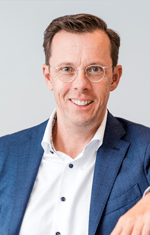
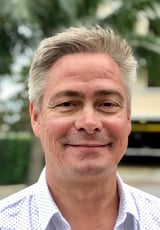
    Dr. Thomas Lebeth, VP of Advanced Technologies & Innovation, and Jan Müsebeck, Quantum-Safe Network Solution Architect at dacoso, supported the project from different perspectives: Thomas Lebeth with his many years of experience in research, innovation, and customer projects, and Jan Müsebeck with his focus on the practical implementation of quantum-safe network solutions and the protection of critical infrastructure. Together, they contributed their expertise directly to the work of the SEQRET consortium.
    Thomas Lebeth
    Jan Müsebeck
    Dr. Thomas Lebeth, Vice President of Advanced Technologies & Innovation
    Jan Müsebeck, Senior Pre-Sales Solution Consultant
    icon20

    What insights are emerging from SEQRET?

    SEQRET demonstrates how Quantum Key Distribution (QKD) can be integrated into existing telecommunications networks from both an economic and technical perspective. At the same time, the project is developing concepts for the operation, maintenance, certification, and long-term deployment of quantum-secure infrastructures.
    icon15

    How are we already supporting businesses today?

    Since 2019, we have been helping companies prepare for the security requirements of the quantum age. We analyze risks, develop appropriate strategies, and integrate quantum-secure solutions such as PQC, QKD, and QSKaaS into existing networks.
    icon19

    What are the benefits for companies and government agencies?

    SEQRET demonstrates how quantum-secure technologies can be integrated into existing telecommunications networks and operated in the future. This provides companies and government agencies with guidance on the step-by-step development of quantum-secure communications infrastructures and enables them to make more informed decisions about which technologies are best suited to their needs.

    Secure Communication with Technology from Europe

    SEQRET relies on European partners and suppliers for production. In this way, the project not only advances QKD technology but also strengthens the knowledge and capabilities Europe needs for secure quantum communication. The goal is to enable the protection of particularly sensitive data using European technology in the future.