
3 min read

An excavator. For example... Immediately detect and resolve incidents on the fiber-optic line using ALM

An excavator. For example... Immediately detect and resolve incidents on the fiber-optic line using ALM

What happens on a fibre-optic link – for example, between two data centres – often goes unnoticed for a long time. Yet even minor changes can lead to significant problems with data transmission later on. Our colleague Daniel Dubiel explains how Advanced Link Monitoring (ALM) provides transparency and significantly speeds up troubleshooting.

An excavator strikes a fibre-optic cable during construction work, moisture penetrates a cable duct, or someone tampers with a line. The causes may vary. The consequences are often the same: unstable connections, outages and time-consuming troubleshooting.

Anyone operating critical fibre-optic infrastructure wants to detect such problems as early as possible – ideally before users or applications are affected. This is precisely where Advanced Link Monitoring (ALM) comes in. The solution continuously monitors fibre-optic links during live operation and reports changes in real time. This enables faults to be isolated more quickly, causes to be pinpointed more accurately and downtime to be reduced.

The problem often lies between the sites

In most networks, routers, switches, firewalls and applications are monitored extensively. If a component fails or performance deteriorates, the systems trigger the appropriate alerts.

The fibre-optic link itself, however, often remains a blind spot. Yet many problems arise precisely there. A cable can be damaged without the connection failing immediately. Attenuation increases, signal quality deteriorates slowly, and it is only after a delay that the first effects on services become apparent. Then begins the often laborious search for the cause.

Particularly over long distances between sites, data centres or critical infrastructure, this troubleshooting process costs valuable time. Anyone wishing to respond more quickly must therefore monitor not only the active components, but also the fibre-optic cable itself.


 Detecting bending coupler attacks

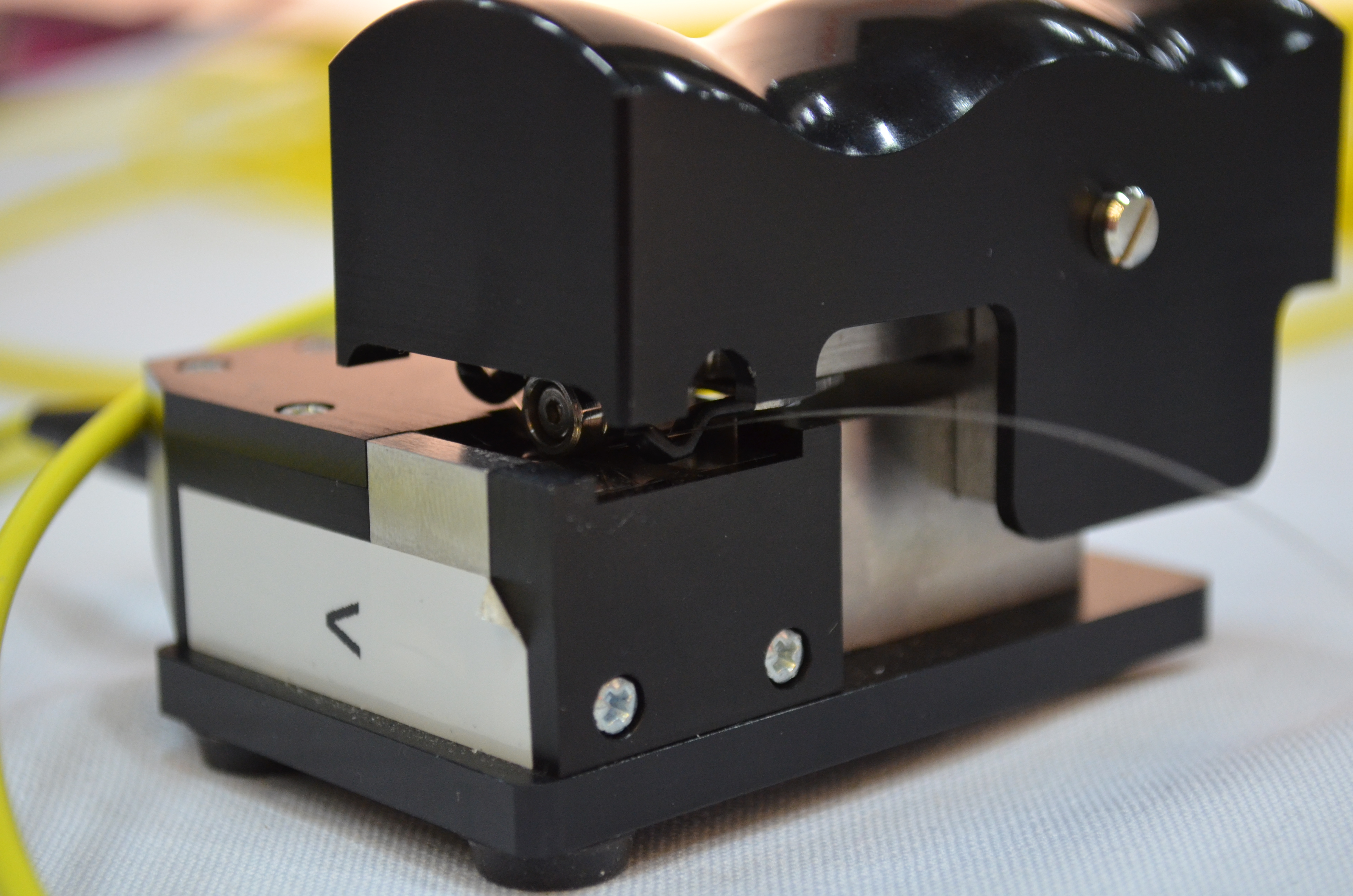
So-called bending couplers can be used to extract light signals from an optical fibre without directly interrupting the connection. Such hacking attacks alter the optical properties of the link and can be detected through continuous monitoring. We demonstrate this scenario in our live demos using the ADTRAN ALM-16 monitoring system. 

Biegekoppler

What makes Advanced Link Monitoring different?

ALM brings monitoring directly to the physical infrastructure. To do this, the solution uses its own monitoring wavelength of 1,650 nanometres. Whilst production data is transmitted via the existing wavelengths, ALM monitors the condition of the fibre-optic cable in parallel and continuously. Data transmission is not affected in the process.

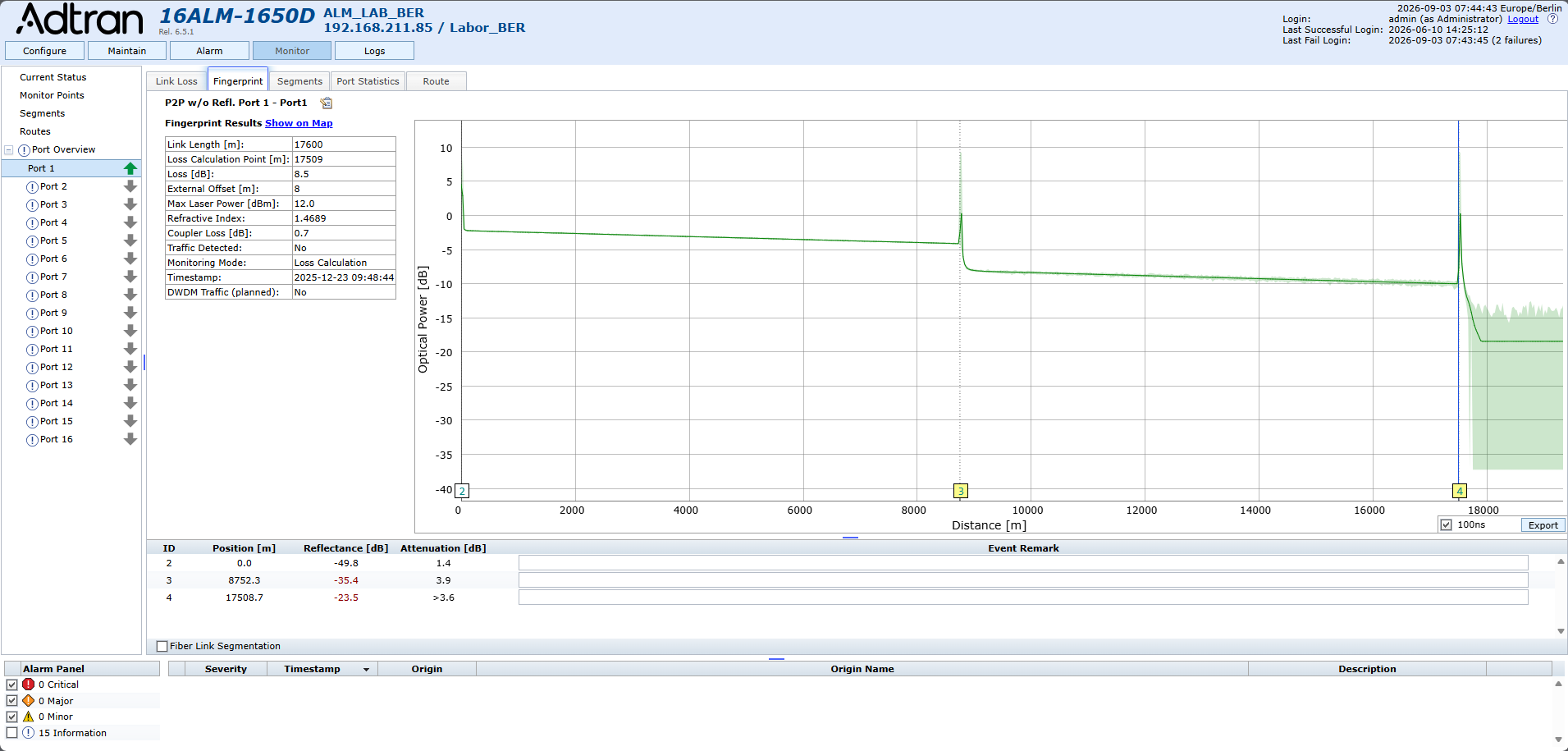
The method is based on OTDR (Optical Time Domain Reflectometry). Put simply, the system sends optical pulses into the fibre and analyses the returning reflections. This produces a detailed profile of the route, which is stored as a reference.

If the attenuation changes at any point along the connection at a later date, ALM detects this deviation immediately. This may indicate incipient damage, moisture, a cable break or even an attempt at tampering.

ALM_01

ALM Dashboard

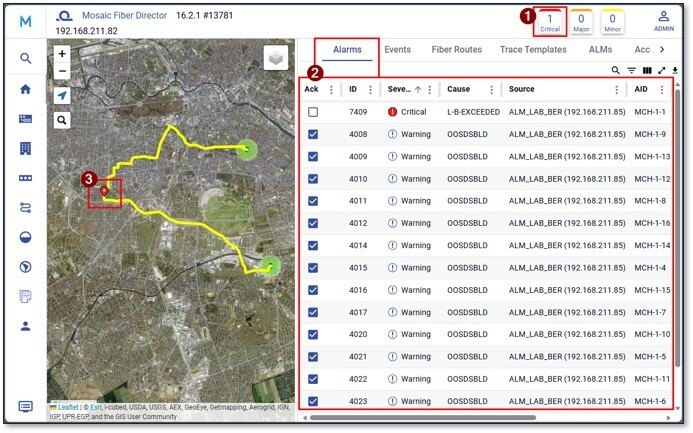
The ALM Dashboard displays the status of the fibre-optic links in real time and reports any changes immediately.  

Alm 2

On the technician’s smartphone 

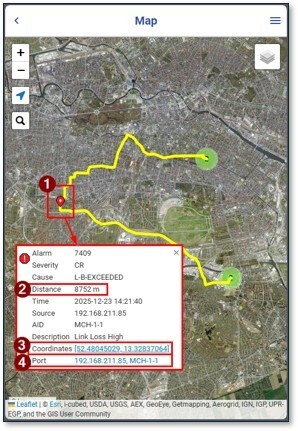
The complementary Mosaic Fiber Director pinpoints faults precisely along the route. As a smartphone app, it helps service technicians reach the affected section quickly. 

Not only recognize, but also locate

However, the real added value lies not solely in the alarm. The crucial question is usually: where did the problem arise?

ALM not only detects changes along the route, but also pinpoints their location at the same time. This means that operators and service teams know much more quickly where they need to look. This significantly reduces the time and effort required for analysis and speeds up fault clearance. As a result, the average recovery time can often be cut by several hours. Modern management and GIS systems can also display the detected events graphically and assign them to the relevant section of the route.

For even greater safety: passive ALM sensors monitor manhole covers and road junctions and send real-time alerts when an access point is opened – find out more in the video.

Constantly monitored, rather than checked from time to time

Another difference compared with many traditional methods lies in the nature of the monitoring. Many measurement systems check cables at specific intervals or one after the other. Events may go unnoticed between two measurements.

ALM, on the other hand, monitors the fibre continuously. Changes are detected and reported immediately. This means that even short-term faults or interventions can be detected, which might not be visible with cyclical measurements.

Of particular interest to critical infrastructure

Advanced Link Monitoring is ideal wherever fibre-optic connections are critical to business operations or public services. These include, amongst others:

    • Data centre interconnections
    • Carrier and service provider networks
    • Municipal utilities and energy suppliers
    • Public authorities and KRITIS operators
    • Dark fibre infrastructures
    • Point-to-point and PON networks

Conclusion 

Advanced Link Monitoring makes the fibre optic cable itself transparent. The solution continuously monitors links, detects changes in real time and pinpoints their cause directly on the line. For operators of critical infrastructure, this means one thing above all: greater control over their own infrastructure and significantly less time lost during fault clearance.


Daniel Dubiel
Daniel Dubiel, Solution Consultant Optical Network, dacoso

Optical data transmission has been Daniel’s technical specialism for many years. Based at our Berlin office, he supports companies, network operators and KRITIS organisations in the planning, security and operation of modern fibre-optic infrastructures. As one of our specialists in Advanced Link Monitoring (ALM), he is the point of contact for the monitoring and security of critical fibre-optic links and, drawing on his experience, ensures that the technology is deployed precisely to meet the customer’s needs.